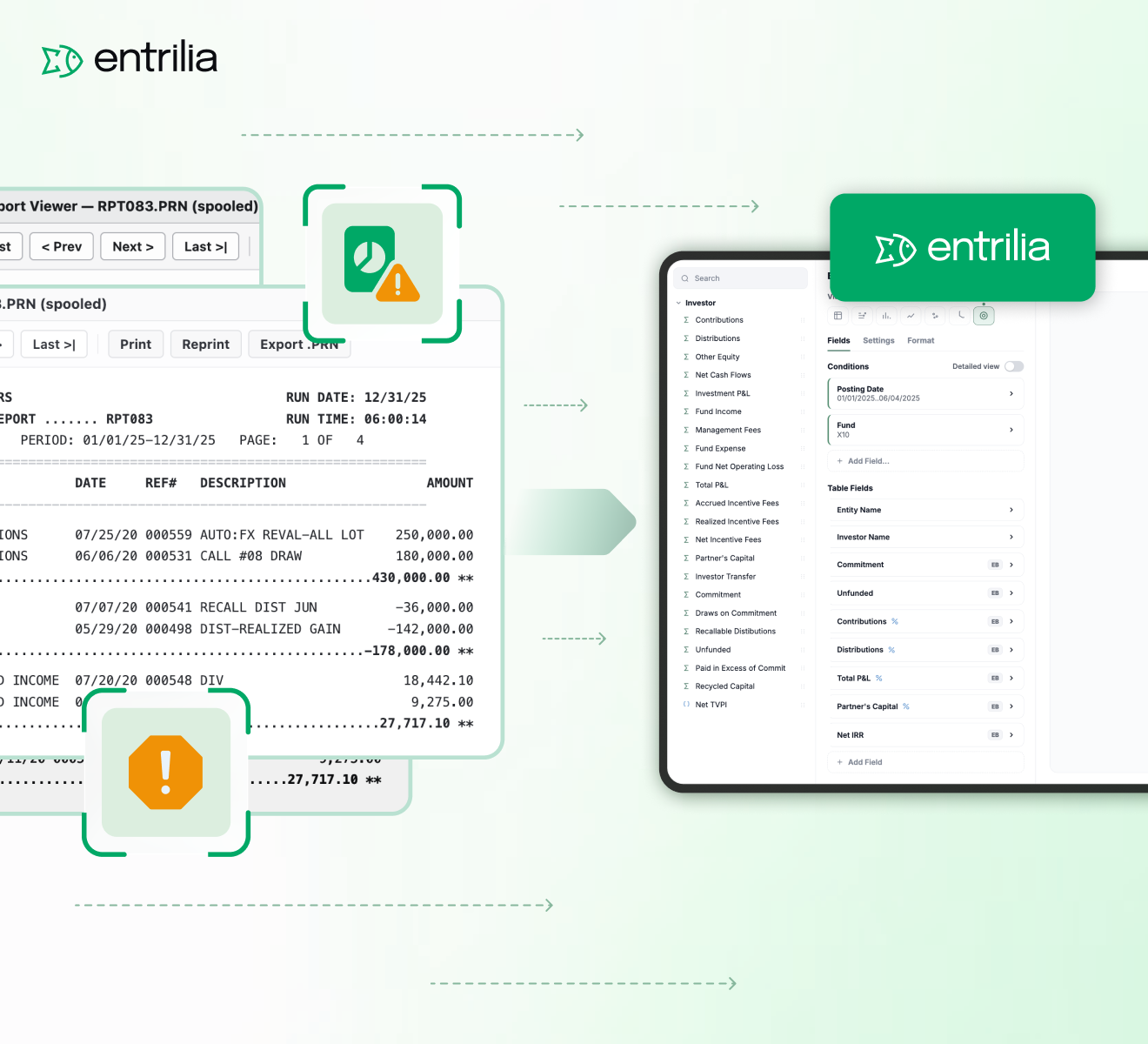

Fund teams usually enter migration focused on moving their historical data accurately: mapping accounts, loading transactions and matching opening balances.
At Entrilia, matching those balances is the starting point. Our implementation team also reconciles the underlying transaction history to confirm that investor activity rolls forward correctly. That review often uncovers problems that have been sitting in the source data for years.
Getting the opening balance right isn’t enough. A migration should prove that the historical accounting activity that produced that balance is also correct.
Across recent Entrilia migrations and client support conversations, we have seen historical transfers arrive with missing or incorrect tags. We have seen cost move between investors while the shares stayed with the original holder. In another case, a share transfer also appeared in the investor contribution account, counting the same activity twice.
The legacy reports had continued to tie at the total level. The problems only became visible when the teams rebuilt the investor-level history and asked each part of the NAV roll-forward to reconcile.
Migration did not create those breaks. It gave the team a reason to look closely enough to find them.
How a total can tie while the history does not
A closing balance confirms where the fund ended. A well-constructed transaction history explains how it got there.
Historical adjustments can bring NAV back into line after an earlier classification issue. Some reports group different forms of capital activity together, and some teams maintain accounting logic outside the ledger. These practices can preserve the expected total and weaken the record behind it.
At the investor level, the capital roll-forward should independently reconcile. Opening capital, contributions, distributions, allocated profit and loss, transfers, and other capital activity should explain the investor’s closing balance. A fund-level NAV tie does not prove that the underlying investor history is correct. Each movement needs the correct investor and transaction type. Any weakness in that chain can affect the next allocation or investor statement.
This gives fund teams a useful principle for migration: reconcile both the movement and the destination. Opening balances need support from the history that created them.
Transfers are where things get interesting
Investor transfers touch several parts of the ledger at once. Depending on the terms, they can move investor capital, unfunded commitment, profit and loss, and the investor’s allocated share of underlying investment cost, ownership, and value. Each component must be attributed to the correct investor while remaining connected to the original activity.
When classifications are incomplete, cost and shares can move differently, or a transfer can overlap with activity already recorded in an investor’s capital account. Fund-level NAV may still look right while the investor roll-forward breaks, affecting future allocations and reporting.
Four checks for historical transfers
Investor transfers deserve particular scrutiny because one event can affect several parts of the ledger. The following checks help establish whether the transfer history is complete.
1. Confirm what moved
Start with the source entries and identify every component included in the transfer. The legal terms and accounting treatment should determine whether the event moves capital, unfunded commitment, profit and loss, or allocated investment attributes such as cost, ownership and value.
A transfer record that shows only one component may be incomplete. The source documents and ledger entries should tell the same story.
2. Follow investment attributes together cost and shares together
Where the accounting treatment requires underlying investment attributes to transfer, cost, ownership and value should move consistently to the receiving investor. A mismatch can distort investor-level ownership records, allocations and subsequent reporting.
This check should be performed at the effective date of the transfer. Later adjustments may restore the closing total and make the original break harder to see.
3. Review the capital accounts
Trace the transfer through the relevant investor capital accounts. Check the effect on contributions and distributions, along with allocated profit and loss.
This review can expose duplicated activity. A share transfer recorded again as a contribution can overstate the investor’s contribution history even when the fund-level NAV remains unchanged.
4. Reconcile each investor’s capital roll-forward
Take each investor’s opening capital balance and apply the transfer activity, then continue through subsequent allocations and other activity to the closing position.
The roll-forward should explain every change. An unexplained difference points the team back to the date and component that needs investigation.
Reading the break
The shape of a reconciliation break often gives the first clue to its source.
For example, cost moving without the corresponding ownership or shares can point to an incomplete transfer treatment or mapping issue. Activity appearing in both a transfer and a contribution account suggests duplication. A difference beginning on one effective date narrows the search to the entries posted around that event.
The implementation team can then compare the source documents with the imported transactions. This keeps the investigation grounded in the accounting history and helps the client determine the correct treatment.
Once the source of the difference is identified, the fund team can determine the appropriate accounting treatment. The resulting correction may involve updating a transfer classification, reversing and rebooking an allocation, or correcting other historical attributes in the migrated data.
Entrilia’s data adjustment tools give authorized users a controlled way to make those corrections. The resulting ledger retains the adjusted entry and its relationship to the surrounding history.
What to expect from a controlled migration
A well-run migration should leave the fund team with evidence, not a simple confirmation that the balances matched.
The team should be able to review the exceptions identified during reconciliation and understand how each was resolved. Material accounting decisions should be documented with enough context for a future reviewer. Investor roll-forwards should connect to the allocated entries behind them. The opening position in the new system should remain traceable to the source history.
These outputs make the go-live decision easier to assess. They also reduce the amount of institutional knowledge held in spreadsheets or individual memory.
The value after go-live
Reconciled history improves the daily work that follows migration.
An accountant reviewing a capital account statement can move from reported NAV to the relevant transfer or allocation. Questions about a balance begin with the ledger record, reducing the need to reconstruct history in a separate file.
Entrilia applies the same accounting controls to new activity. Teams can review the impact of an entry before approval, and any later correction remains visible in the ledger.
That history also strengthens the wider data model. SmartViews gives accounting data a consistent business meaning by defining metrics such as NAV and commitments inside a governed reporting layer. Those definitions flow into reports and APIs across Entrilia.
Why this matters for AI
Clean historical data matters beyond financial reporting. As fund teams begin using accounting data through APIs, analytics and AI-assisted workflows, weaknesses in the underlying history become even more consequential.
AI is only as dependable as the accounting context it receives.
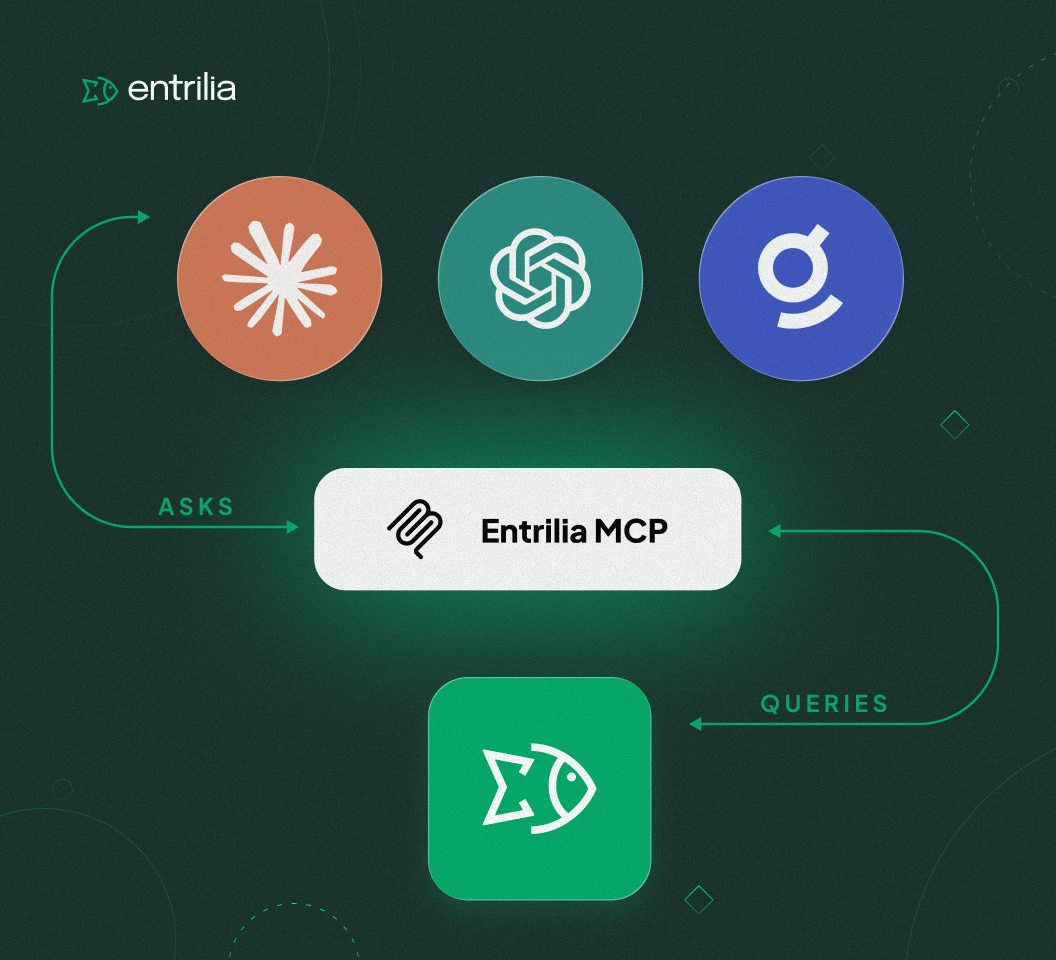
Entrilia MCP allows compatible assistants to query SmartViews under the user’s existing permissions. The assistant interprets the question, and Entrilia supplies the approved definitions and figures from the underlying system.
The fund’s logic remains in the accounting and semantic layers, where the team can govern it and trace the result. Reconciled transaction history gives those layers stronger source data.
Migration quality therefore reaches far beyond the opening balance. It shapes the information used for future reporting and gives AI-assisted workflows a sound accounting foundation.
The standard for a reconciled migration
A successful migration does more than establish the right opening balance. It leaves the fund team with a transaction history that explains how that balance was reached and can support the accounting that follows.
Entrilia combines disciplined implementation with a data model designed for modern fund operations. Your team enters the platform with reconciled reliable history and a ledger ready for the work ahead.
Considering a move from your current system? Talk to our team about your historical data and what a reconciled go-live could look like for your funds.
.png)